
The African Film Industry Is Not Dead
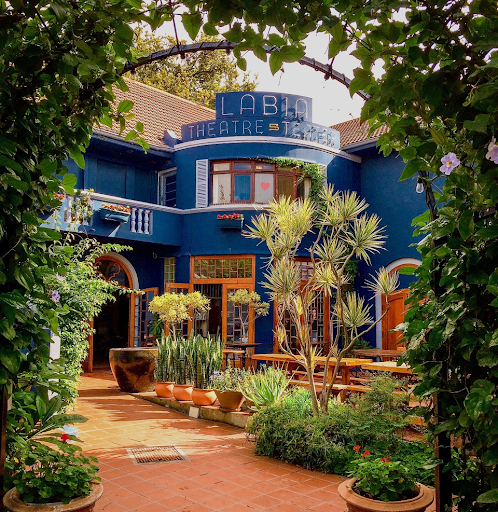
LABIA THEATRE VIA heremagazine.com
Over recent years, films in Africa, especially in the South African film market, have been discredited as a consequence of their attempts to mimic tried and true Hollywood film techniques, instead of depicting stories unique to the African landscape. I have, however, recently come to uncover a goldmine of independent and cinematically impressive, unique African films in a space that I would have least expected to.
When enrolling for my first year at university in 2020, I expected to learn a lot, not only about the world, but about myself; however, what I did not imagine was how immersed in cultural art forms I might become simply based on the coursework I was assigned. When it came time to choose courses, I was unconvinced that taking a film course would offer me much academically, and was thus apprehensive about enrolling for one. However, now, almost three years down the line, I have found myself exposed to African film forms that I am convinced I might never have come across if not for having taken film.
This “feud” follows that which has taken place between Millennials and the so-called Boomers, the generation said to be born between 1946 and 1964. This clash follows the age-old notion that each generation will live to be disappointed in their successors, as the youth will continue to actively reject what those born in the generations ahead of them may expect of them.
The first film that I took a great liking to was a postcolonial, South African film called Love The One You Love (2014), directed by Jenna Bass. Despite being not even a decade old, it holds as a subtle reflection of the plight of the postcolonial South African citizen, who, even if they do not know it, is haunted by the false promises of democracy. Despite no blatant discussion of the so-called “rainbow nation” itself, the characters attempt to navigate their individual lives under this new South Africa. The storyline interrogates the honest and sometimes uncomfortable aspects of love, with the characters not realising themselves that their issues might have more to do with postcolonial expectations of the life that a “born free” is to lead, than one might think.
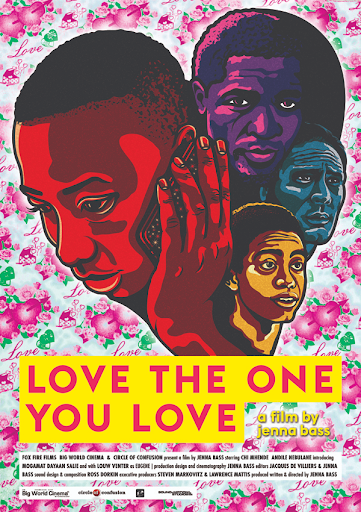
movie poster via IMDB
Now, I must be clear that a lot of my analysis of the film derives from my own opinion along with the course resources offered to me that have informed my personal viewing, and therefore, my perception of the film could differ vastly from your own as the reader, if you perhaps do decide to watch the film. I will, however, share my favourite parts of the film. I thoroughly enjoyed the several moments of stillness between scenes, where nothing at all happened apart from perhaps natural sounds of the ocean, or random videotape footage of the characters that did not play an integral role in the plotline, but induced a sort of closeness between viewer and character. I also enjoyed the raw vulnerability of the character’s and the narrative decision to not shy away from, but instead focus on their individual emotional and psychological issues, without wrapping it all up in a neat “hollywood-esque” conclusion, allowing the film to be a bit open-ended and inconclusive, truer to reality.
It is important to note that films like Tsotsi, Mapantsula, and the likes, are also interesting films produced in South Africa as a form of social commentary, but I believe they have already received their due credit, and would like to centre lesser-known films that I have had the privilege of being introduced to. With that said, outside of Africa, there exists an even greater array of fantastic film productions. Other films that I have been exposed to during my studies include Mati Diop’s Atlantics (2019), and Rugano Nyoni’s I Am Not A Witch (2017), both of which are directed by black women of African descent. Both of these films incorporate interrogations of stories of witches and spirits, concepts that are unfamiliar to the West, but form integral parts of many cultures and even some religions practiced in Africa, to issue their social commentary.
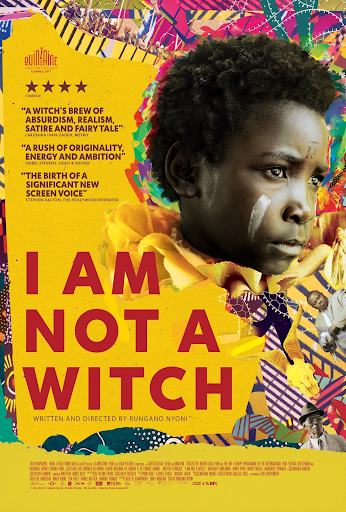
movie poster via IMDB
Atlantics drew me for the same reasons that Love The One You Love did, in the slow contemplativeness of it’s cinematic techniques. Its centrality on African women, as well as its interrogation of labour exploitation in postcolonial Africa as its central narrative, were also interesting narrative approaches that drew me during my own viewing. Alternatively, the colours and the simplistic narrative are what took my liking in my viewing of I Am Not A Witch. Furthermore, not only do these films have something to say, they also showcase much of the untapped talent in Africa, featuring many first-time actors who take on their leading roles quite well in my opinion.
Even so, there are many ways to enjoy a film that do not necessarily require one to think, contemplate and unpack its meaning, but what I think I love about these films are that you can choose whether or not you would like to read into the commentary, or whether you would prefer to watch it simply as is, both sides of the coin allowing for an enjoyable viewing. That said, I have not even scratched the surface of films like these that exist in contemporary Africa, as there are many more to be found. I am, however, grateful that they managed to find me. I must still admit though, that I have a long way to go before I can see more of, and fully comprehend the amount of cinematic talents that exist within our own African borders.
Related articles:
Featured
 20 Oct 2022I Thought We Said #ACAB: The Purpose of PolicingIn 2000, a Special Assignment program was aired that exposed the vicious dog training techniques used by the North East Rand dog unit.In the program we are shown a video captured by the officers themselves, one that the dog unit took so much pride in that they would screen the footage for their fellow policemen and friends at a braai. The footage itself is from 1998 and portrays 6 policemen who wanted to train 2 young police dogs to be vicious and aggressive. 2 older dogs were to be used to teach the new dogs how to attack and bring down a human target. Those human targets were 3 immigrants that had been picked up, without any charges, for the sole purpose of this dog trainingRead more →
 20 Oct 2022Postmodernism: The interpretation of culture to give meaning to realityHyperreality refers to the condition of being unable to distinguish and differentiate between reality and simulations thereof. This is exemplified more intensively by social media. At the genesis of the 21st century, hyperreality was perpetuated primarily by basic modern media. TVs, magazines and movies were the primary advocates of hyperreality. Unrealistic standards of existence were illustrated through these forms of media. In today’s atmosphere, the primary advocate of hyperreality is social media. It heavily blurs the lines separating reality and simulations portraying reality. 58,4% of the world’s population is active on social media. This implies that the advancement of hyperreality is perceived by over half of the world’s population. No wonder we hate ourselves so bad.Read more →
 29 Sept 2022CAN AI BE INTEGRATED INTO TRADITIONAL ARTISTIC MEDIUMS?The recent developments around AI generated imagery/artwork has brought up a lot of discussion around how it can be integrated into the current artistic ecosystem and what that could mean for artists.Read more →
 20 Sept 2022The Line: between smoke and mirrorsA city: 170km long, 200 metres wide, completely encased in mirrors and built in the Saudi desert. Although it may seem like the description of a fictional post-apocalyptic city, the plan is real and the vision of His Royal Highness Saudi Crown Prince Mohammed bin Salman.Read more →
 30 Aug 2022DREAMING AS A CREATIVE FOUNDATIONIn the 21st Century, the majority of the creative projects being released are generated by looking at pre-existing work and previous ideologies. I think that the process of finding original ideas by simply looking inwards is a concept that could be explored further.Read more →
 25 Aug 2022Is attraction the only true sexual orientation?GENDERFLUIDITY HAS BECOME A CHARACTERISTIC ASPECT OF SEXUALITY AS WE KNOW IT. RETROSPECTIVE VIEWS AND PRINCIPLES ON GENDER ROLES AND SEXUALITY ARE SLOWLY PHASING OUT. “BOYS DON’T CRY” AND “GIRLS LIKE PRINCESSES” ARE STATEMENTS THAT CAN GARNER A LOT OF BACKLASH TODAY.Read more →
 16 Aug 2022Gen-z vs. Accusations of narcissism: Is our generation self-obsessed or in fact, passionately empathetic?For generation to generation, a peculiar period during which the preceding generation dissects and often ridicules the choices and ideals of the succeeding generation, and vice versa, has come to be expected.Read more →
 21 Apr 2022“Everything you see, I owe to Spaghetti!”Picture this: you’re hungry, You’ve been busy all day and haven’t had the chance to eat. as you finally step foot into your house after all your stress, there’s a hot, freshly made bowl of spaghetti waiting for you. When one is hungry like that and presented with food, there is a brief moment of such profound, primal relief. Satisfaction, nutrition and pleasure! All because of a delicious bowl of pasta presented at just the right time.Read more →
 7 Apr 2022IF LIFE WAS A VIDEOGAME, FAMOUS PEOPLE WOULD BE PLAYER 1'S AND THE REST OF US, JUST NON-PLAYABLE CHARACTERS.Thing is, if you're famous, you're more likely to make money—that's just the fact of the matter. but now for the modern times we're living in, this reality starts to stretch and there's this exclusive batch of jobs that you can't really get unless you're famous.Read more →
 5 Apr 2022Are we the Last Men? : a brief look into the predictions of Fredrich Nietzsche.THE SUPERMAN IS THE ULTIMATE PERSON, SOMEONE WHO HAS TRANSCENDED THE PREJUDICES AND RESTRICTIONS OF THEIR SOCIETY AND CREATED THEIR OWN VALUES AND BELIEFS. THEY ARE CREATIVE, DISCONTENT, FLEXIBLE, SELF-CONFIDENT, CHEERFUL AND COURAGEOUS. THEY DEFY NIHILISM BY FINDING MEANING AND PURPOSE ON EARTHRead more →