
Love Jones: A Pioneer In Cinematic Representations of the Black Experience
Black cinema has historically been oversaturated with depictions of struggle and suffering, and although I can recognise the importance of such representations, I find portrayals of blackness wherein black people occupy typically white spaces, through depictions of the ordinary, to be a more powerful resistance to the restrictions of white cinema.
Theodore Witcher’s Love Jones thus emerges as the perfect example of this intervention in my view.
Cinematic depictions of black subjects have undergone somewhat of an evolution over the years. In the dawn of the motion picture, we saw racialized depictions of black people, such as in The Birth of A Nation (1915), wherein not-so-subtle prejudices were being laid against black people. Later we saw a rise in stereotypical representations of the black subject as the sweet, loyal, but one-dimensional “mammy” figure, or similar characters who fit into the “Magical Negro” trope that saw one-dimensional black characters whose purpose served only to progress the story of the white protagonist,
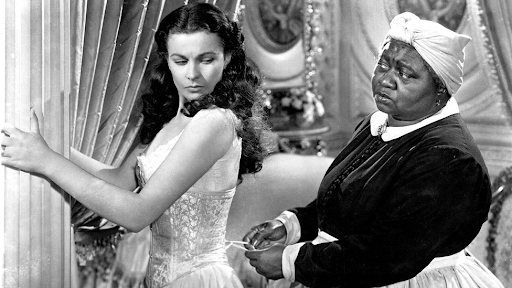
IMAGE FROM BBC - MAMMY TROPE
Beyond that, we have also witnessed the explosion of the “Blaxploitation” film movement of the 1970s, which has been both revered for its centring of black film leads, and criticised for perpetuating sometimes harmful stereotypes surrounding black individuals and their connections to crime-related subjects. . Despite the continued prevalence of some of the stereotypes from these many different phases in black cinema even today, it seems to be that the 1990s onwards saw more common depictions of the everyday lives of black individuals, featuring more films that saw its black characters as multifaceted and complex individuals, a luxury that was once reserved only for depictions of whiteness.
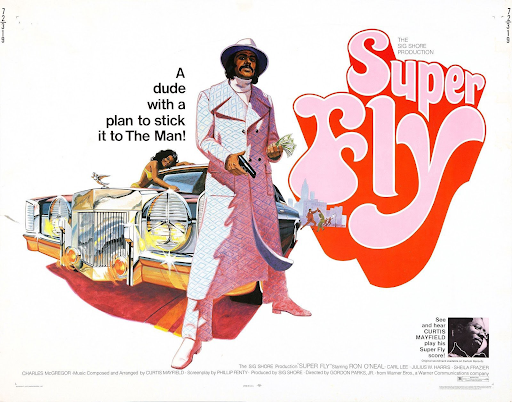
Image from: Cinapse.
Poster for the 1972 blaxploitation film, “Superfly”
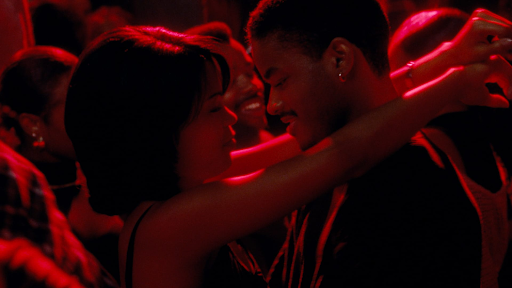
My favourite aspect of the movement towards depicting black people in the ordinary, evolves out of the many black romances of the 1990s and the 2000s, which include films like Brown Sugar (2002), The Best Man (1999), and one of my all-time favourites, Theodore Witcher’s Love Jones (1997). With focus on Love Jones, I believe this film alone is what transformed my perception of black love and the overall black experience. Until I had watched the film, I had been exposed very often to black pain in cinema, whether that be in love, in overall identity, or in historical representations of suffering, but Love Jones offered something different.
Centring Darius and Nina, two young and talented creatives living in Chicago, the story follows the journey of their romantic union, from their first encounter, through to their pursuit of one another, and what manifests out of these two stubborn, intelligent, young people deciding to be together. Now it must be said that the film is not without its faults, and there are indeed depictions of pain and struggle, however, what makes these instances stand out is that their pain is not a direct result of their blackness, but rather a product of their humanness.
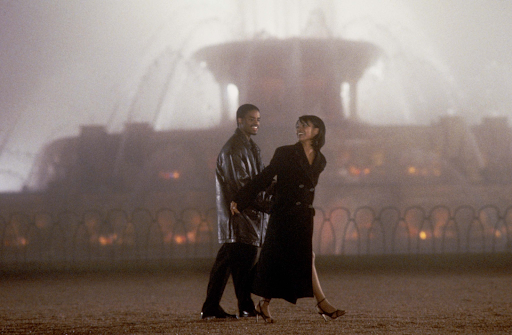
Image from: IMDB
Still from “Love Jones”
Furthermore, despite not emphasising blackness as the central driving force of the film, Love Jones still manages to beautifully incorporate elements of the black experience within the film without overdoing it, nor exploiting these elements. For instance, the characters are often immersed in very cultural spaces of black expression, whether that be a black poetry club, or a reggae nightclub. Moreover, each of the film’s characters also exist very securely within their identities as black individuals, and thus their anxieties or distress have much less to do with their being black. In the same way that white cinema seems to naturalise the lack of people of colour in its cinematic universe, Love Jones does the same with its black characters.
Additional to this depiction of the black individual secure in their identity, is the fact that despite its romantic themes, the film does not depict its characters as in need of love per se. Both parties are represented as desirable, and as such do not require the affection that they offer one another, but rather desire one another’s love. Thus, the mere fact that both Nina and Darius undoubtedly choose one another despite both being well sought after, reproduces the healthy image of black desirability and reveals the opportunity for choice that unfortunately is not always afforded to black cinematic subjects. As such, neither party is trapped by circumstances beyond their control, and both of them are instead free to love wholly.
Finally, what can also be appreciated about the characters’ depictions, are that each of them lead decent, and relatively successful lives, filled with small joys. For instance, despite Darius and Nina’s creative careers being up in the air at the beginning of the film, one never gets the sense that their dreams will be threatened by their race, and this is confirmed once both of them earn success in writing and photography respectively, by the film’s end. Furthermore, both of them also have secure friendships with people as like-minded as themselves, with the exception of one character who ends up becoming the film’s antagonist, further reinforcing healthy platonic relationships alongside the romantic ones.
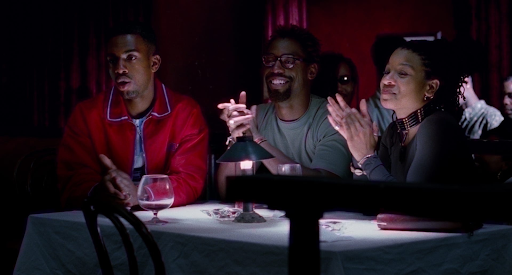
Image from: The Criterion Collection
Still from “Love Jones”
Thus, the film represents, at least to me, the perfect resistance to black cinematic tropes, by allowing its characters to occupy spaces of success, desirability, romantic love, reciprocal friendship, and so on, that we seldom see black people in, allowing blackness to exist in normalcy. What’s more, we as the viewer are also granted our happy ending without overt examples of suffering and struggle before getting there.
Related Articles:
Featured
 9 Feb 2023Why are South Africans not watching South African movies? It cannot be denied that South Africa has brought forth several amazing films and productions. From Tsotsi to Jerusalema, South African films have shook the big screen and have been engraved in our minds. With that being said, why is it that we are not watching South African films and movies anymore?Read more →
 8 Feb 2023Nollywood: An Unexpected Cultural PhenomenonWhether we have paid conscious attention to it or not, Nollywood cinema and its influence on popular culture in the current digital age has been a long-in-the-works phenomenon, which has only very recently received its global due diligence.Read more →
 7 Feb 2023We have never been closer: The Importance of Film Festivals in South AfricaOnce a month, Marvel fans and Twilight fans gather on Twitter to reiterate the impact of watching the Avengers assemble against Thanos and the Cullens face off against the Volturi respectively, live in the theatre. Although the age of streaming has long taken over, we are still a generation that craves to make a connection with what they consume beyond watching.Read more →
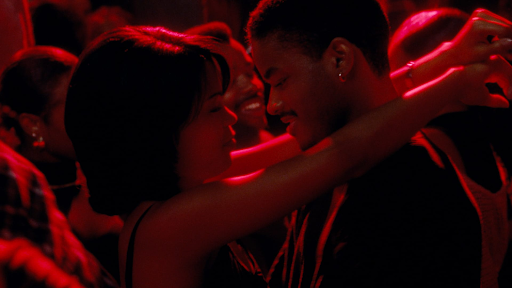 20 Oct 2022Love Jones: A Pioneer In Cinematic Representations of the Black ExperienceBlack cinema has historically been oversaturated with depictions of struggle and suffering, and although I can recognise the importance of such representations, I find portrayals of blackness wherein black people occupy typically white spaces, through depictions of the ordinary, to be a more powerful resistance to the restrictions of white cinema.Read more →
 18 Oct 2022LONELINESS IN THE BIG CITY: THE BRILLIANCE OF WONG KAR WAI FILMSWong Kar-wai is a Hong Kong film director, screenwriter and producer who is often lauded as one of the greatest filmmakers of all time for his atmospheric and non-linear narrative films. But what separates his work from the rest of the artsy films that have beautiful images of sunsets but lackluster stories? The pure and raw emotion. Read more →
 1 Sept 2022The African Film Industry Is Not DeadOVER RECENT YEARS, FILMS IN AFRICA, ESPECIALLY IN THE SOUTH AFRICAN FILM MARKET, HAVE BEEN DISCREDITED AS A CONSEQUENCE OF THEIR ATTEMPTS TO MIMIC TRIED AND TRUE HOLLYWOOD FILM TECHNIQUES, INSTEAD OF DEPICTING STORIES UNIQUE TO THE AFRICAN LANDSCAPE. I HAVE, HOWEVER, RECENTLY COME TO UNCOVER A GOLDMINE OF INDEPENDENT AND CINEMATICALLY IMPRESSIVE, UNIQUE AFRICAN FILMS IN A SPACE THAT I WOULD HAVE LEAST EXPECTED TO.Read more →
 23 Aug 2022The death of slapstick comedy The Slapstick comedy genre arose alongside the growing silent-film industry of early Hollywood, with Chaplin-esque films garnering great popularity. Yet, despite the genre continuing to be reproduced over the decades, its relevance and reach have slowly fizzled out.Read more →
 10 May 2022Profit over Passion: Hollywood’s Lazy Obsession With Film And Series RebootsBY-LINE: HOLLYWOOD’S TROUBLING OBSESSION WITH REMAKING BELOVED FILMS AND SERIES IN OFTEN LESS-THAN-IMPRESSIVE WAYS BRINGS TO QUESTION THE TRUE INTENTIONS OF MAJOR FILM PRODUCTION COMPANIES WHO TREAD THE LINE BETWEEN PRODUCING BASED ON ARTISTIC INTEGRITY, OR FOR A QUICK PAYDAY.Read more →
 6 Apr 2022Why is character development is worth writing about?Countering The Argument That The Quality Of Music Has Deteriorated In The Modern EraRead more →